Prime, then activate.
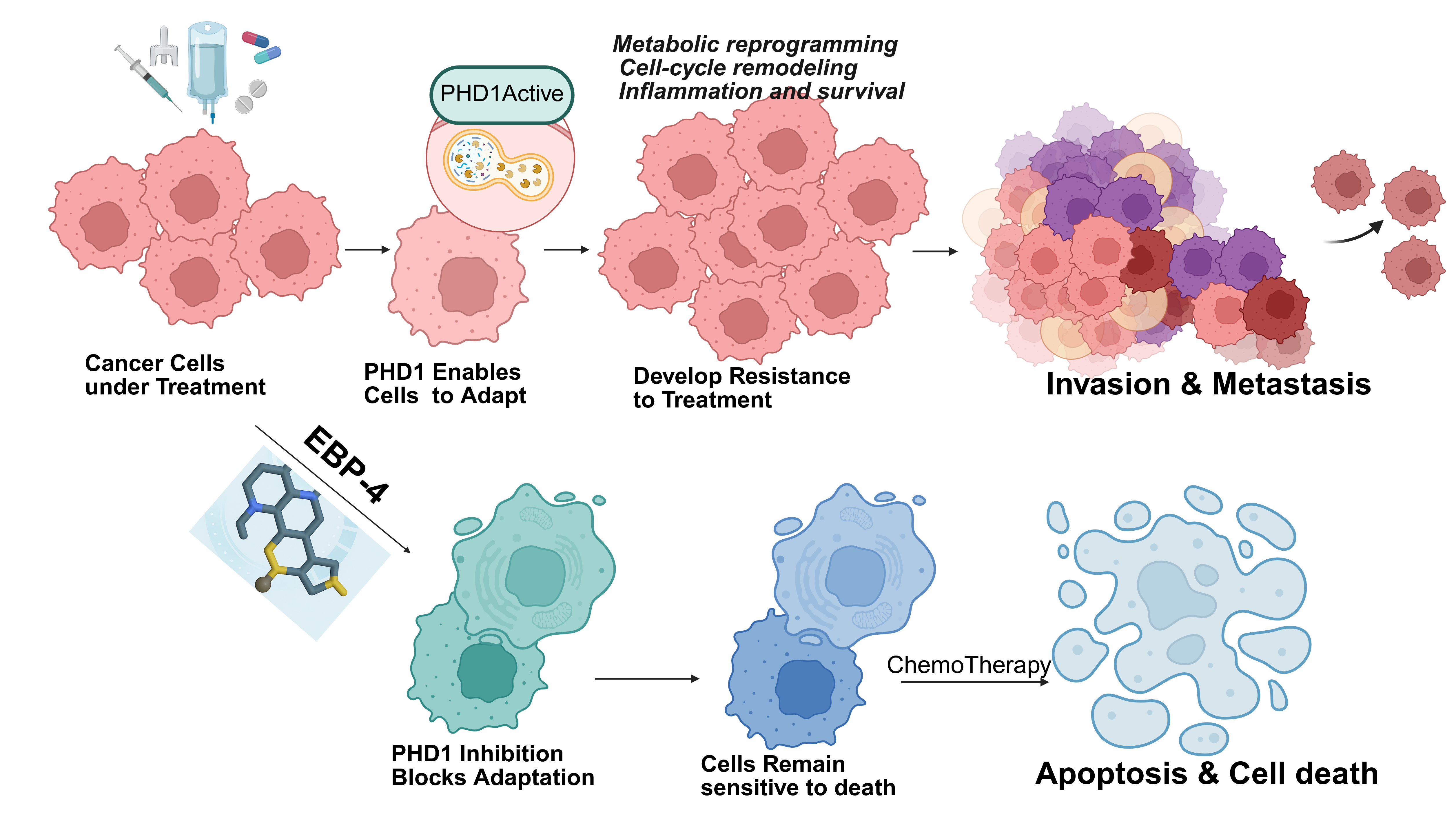
A combination-ready mechanism: selective PHD1 inhibition primes latent p53; genotoxic standard-of-care chemotherapy activates it.
Mechanism
PHD1 (EGLN2)
An oxygen-dependent dioxygenase at the convergence of hypoxic signaling, p53, and NF-κB. Selective loss of PHD1 activity primes a p53-dependent death program.
Isoform selectivity
PHD2 is the dominant oxygen sensor governing erythropoiesis; sparing PHD2/PHD3 avoids the HIF-driven systemic toxicity of pan-PHD inhibitors.
Combination logic
EBP-4 primes a latent p53 pool; genotoxic chemotherapy activates it — chemo-potentiation in combination, not standalone cytotoxicity.
The EBP-4 mechanism
PHD1 lets cancer cells adapt to treatment — reprogramming metabolism, remodeling the cell cycle, and driving survival — leading to resistance, invasion, and metastasis. EBP-4 inhibits PHD1 to block that adaptation, so cells remain sensitive and chemotherapy drives apoptosis.